
Nurturing hearts, shaping futures
Welcome to Social and Emotional Development, your trusted resource for understanding and fostering crucial life skills in children. Located in Zephyrhills, Florida, we're dedicated to educating parents and caregivers on the importance of social-emotional learning. Join us on this journey to build brighter futures, one heart at a time.
Effects of Prenatal Development and Care
- Prenatal stress, poor care, and harmful early childhood experiences greatly shape social-emotional development by altering stress systems, that lead to issues like emotional dysregulation, poor impulse control, anxiety, depression, and other behaviors. If a child doesn't have supportive relationships during their childhood, this action can have a negative effect. These early impacts create lasting vulnerabilities that can affect how relationships are formed, managing emotions, and trying to understand the world around them.
Effects of Prenatal Development and Care
- Maternal stress, anxiety, or depression in pregnancy can alter fetal brain development that increases the risk of mood disorders, ADHD, and other difficulties.
- Neurobiological changes like stress can alter the brain structures and functions by affecting emotional processing and fear responses.
- Stress can also cause epigenetic changes (altering gene expression without changing DNA), influencing the child’s lifelong stress response.
Effects of Early Childhood Experiences
- Harsh parenting, neglect, or trauma in early childhood can dysregulate the HPA axis, making children more sensitive to threats.
- Early adversity hinders the development of critical skills like impulse control, empathy, and understanding emotions, impacting competence.
- ACEs are linked to behaviors of aggression or conduct issues and then internalizing problems of anxiety and depression in adolescence.
Milestones for Infancy, Toddlerhood, and Early Childhood
Educating to empower parents and caregivers with the knowledge and tools they need to make a positive impact with meeting milestones.
Infancy
Birth-3 Months
Smiles at around 2-3 months
Longer periods of eye contact
Calms down to familiar voices and touch
Uses facial expressions and body language to show their needs
4-6 months- Smiles or coos to get attention
Recognizes familiar faces and voices
Start to giggle and laugh
Shows there are excited by waving their arms and legs
9-12 months
May become shy or fearful around strangers
Separation anxiety when their caregiver leaves.
Interact to games like pat a cake and peek a boo.
Recognizes their name when called
Shows who they prefer more
12-18 months
Shows affection
Gaining independence by exploring but stays close to their caregiver.
Sharing
Starts imitating by following simple actions like clapping or facial expressions.
Toddlerhood 1-3 years
- Around 18 months
- Explores alone but with parent close by
- Points to show something of interest
- Puts hands out for you to wash them
- Looks at a few pages in a book with you
- Helps you dress them by pushing arm through sleeve or lifting a foot
- Around 24 months
- Notices when others are hurt or upset
- Looks at your face to see how you react in new situations
- Shows defiant behavior (doing what told not to do)
- Imitate others, especially adults and other children
- Shows more independence
- Around 36 months
- Calms down within 10 minutes after you leave
- Notices other children and joins them in play
- May get upset with major changes in routine
- Shows affection for friends without prompting
Early Childhood 3-5 years
- Make believe play, noticing and joining other children, playing cooperatively, taking turns.
- Showing a wide range of emotions, showing empathy, wanting their friends happy, showing independence.
- Can calm down after separation, following simple rules, changing their behaviors based on where they are.
- Pretending to be something else, telling stories, developing friendships.
- Moves from being focused only on themselves (infancy) to having empathy for others.
- Developing communication skills, self- regulating their emotions, and autonomy.
- Able to do simple chores at home



Does your family need more ideas with social and emotional learning strategies and/or self-regulation skills to implement at home? Want to support your 3–7-year-olds social-emotional development?
- Preschool and Early Elementary (Ages 3-7)
- Routines
- Read books as a family that talk about emotions
- Practice simple breathing exercises, like blowing up a balloon
- Use visuals
- Play board games while sharing, following directions, and taking turns
- Acting out different scenarios
- Talk openly about feelings and the ok way to act. Changing a negative situation into a positive one.
- Being present to show that they are important.
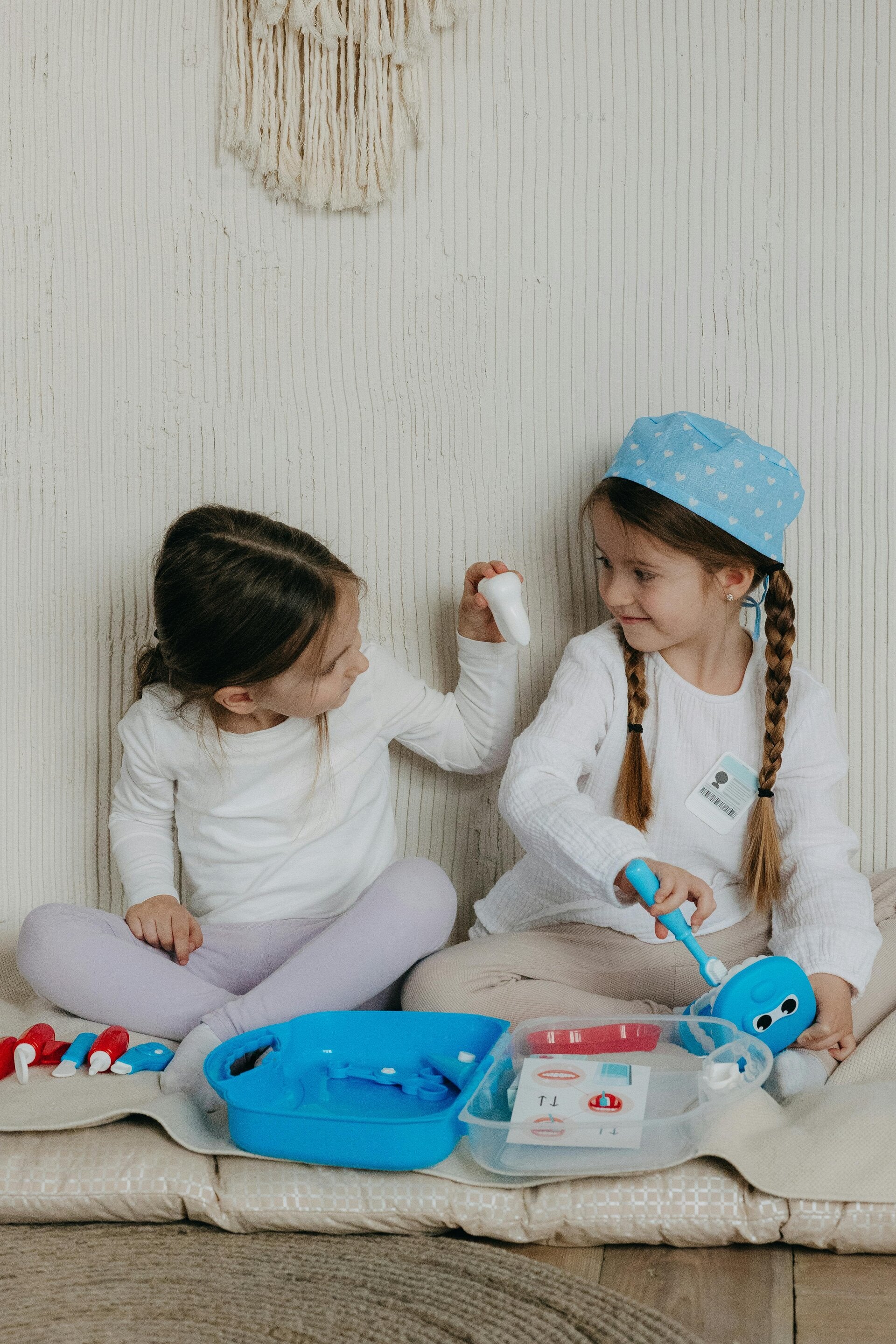
Social-emotional learning strategies in Early Childhood
- Provide different and interesting materials to do hands-on activities for play-based learning.
- Use puppets
- Read different books
- Act interested in what their favorite things are by asking open-ended questions
- Model the expected behaviors.

What is self-regulation? Self-regulation is becoming aware of one’s brain-body responses to stressors in everyday life and applying personalized strategies to return to a state of calm (Slater, A. 2021). The ability to manage your emotions, thoughts, and behaviors to meet situational demands, like waiting your turn instead of acting impulsively.
Teachers can model and encourage the development of self-regulation skills by:
- Modeling calmness with tone, facial expressions, and body language (Collier, K.2024). Expressing own emotions appropriately and demonstrating problem-solving skills.
- Routines support self-regulation because things are predictable, so they feel secure because they know what comes next
- Build a strong relationship with each student by showing them that I am there for them to build trust and a safe learning environment.

Articles
Explore our collection of articles covering a wide range of topics related to social-emotional development.

Activities
Engage children with fun and educational activities designed to build essential social and emotional skills.

Guides
Access practical guides offering step-by-step strategies for nurturing social-emotional growth.

Tools
Discover helpful tools and resources to support parents and caregivers in fostering a positive environment.

About us
Social and Emotional Development is a personal project born from a passion for helping children thrive. As an education-focused initiative based in Zephyrhills, Florida, we are committed to providing valuable resources and insights to parents and caregivers. Our goal is to empower you with the knowledge and tools you need to nurture the social and emotional well-being of the children in your life.
Empowering the next generation
We are dedicated to providing parents and caregivers with the resources they need to foster crucial life skills in children. Explore our website to discover valuable insights and practical tools that promote emotional intelligence and social competence. Located in Zephyrhills, Florida, we are committed to building brighter futures, one heart at a time.

"I've learned so much about how to help my child understand and manage their emotions. The resources are invaluable!"
Sarah Miller
"The activities provided are so engaging and have made a real difference in my child's social skills."
David Rodriguez
"I highly recommend this website to any parent or caregiver looking to support a child's emotional well-being."
Emily Carter
Contact us
Location
Zephyrhills, Florida
United States
Create Your Own Website With Webador